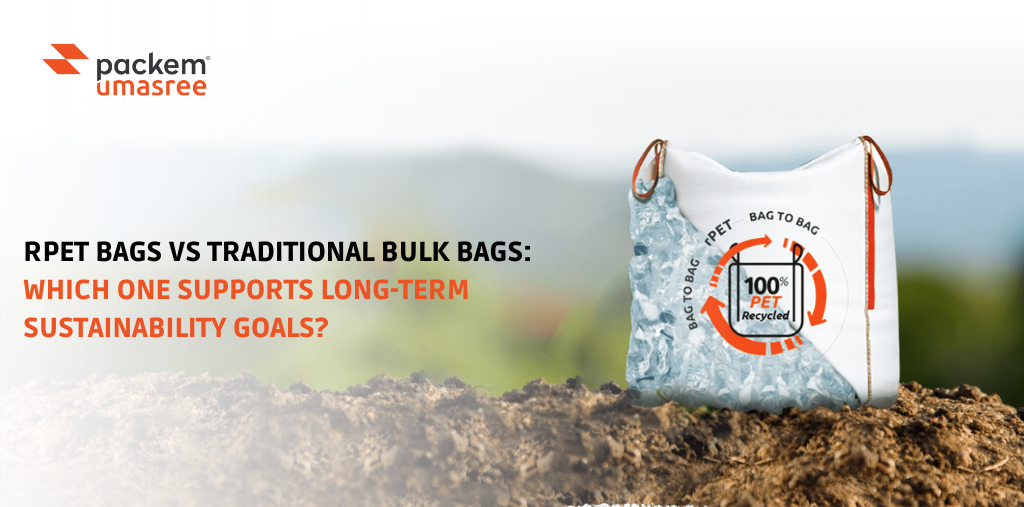
In today’s world, where businesses are under increasing pressure to adopt sustainable solutions, packaging choices play a crucial role in shaping environmental impact and corporate responsibility. One of the most important decisions for industries handling bulk materials such as chemicals, food grains, minerals, fertilizers, and construction materials is whether to use
rPET bags or traditional bulk bags.
This blog explores the key differences, benefits, drawbacks, and long-term sustainability implications of these options, helping you understand which packaging solution aligns best with modern environmental goals and business needs.
What are rPET Bags and Traditional Bulk Bags?
Before diving into sustainability comparisons, it’s important to define the two main types of bulk packaging:
rPET Bags
rPET (recycled polyethylene terephthalate) bags are manufactured from recycled PET plastic, typically sourced from post-consumer waste such as plastic bottles. These materials are cleaned, reprocessed, and converted into tapes that are woven into high-strength fabrics used to make bulk bags.
This aligns with the emerging circular economy principle of “Bottle-to-Bag” and, eventually, “Bag-to-Bag” recycling. Not only do rPET bags reduce plastic waste, they also extend the useful life of plastics by converting them into durable industrial packaging.
Traditional Bulk Bags
Traditional bulk bags often made from polypropylene (PP) are widely used for packaging and transporting dry, flowable materials. These bags have been a reliable solution for decades due to their strength, low cost, and versatility. However, polypropylene is derived from fossil fuels and remains a linear-use plastic unless explicitly recycled, which doesn’t happen at a large scale.
Key Differences: rPET Bags vs Traditional Bulk Bags
Comparing
rPET Bags vs Traditional Bulk Bags isn’t just about raw performance metrics. It’s about how each type of bag affects the environment, supply chain economics, and long-term corporate sustainability goals.
1. Material Source and Environmental Impact
rPET Bags:
- Made from recycled PET plastic, primarily post-consumer bottles.
- Reduces reliance on virgin petroleum-based plastics.
- Helps divert plastic waste from landfills, oceans, and ecosystems.
- Supports closed-loop recycling systems that encourage reuse and reintegration.
Traditional Bulk Bags:
- Mostly made from virgin polypropylene (PP), which is fossil fuel-based.
- While PP bulk bags are recyclable, actual recycling rates remain low due to infrastructure gaps and limited recyclability.
- Uses nonrenewable resources for production.
Winner for Sustainability: rPET Bags – because they repurpose existing waste and reduce dependence on new fossil materials.
2. Energy Use and Carbon Emissions
Manufacturing plastics consumes energy, but the source and amount vary significantly.
rPET Production:
- Uses recycled materials, primarily reducing virgin raw material demand rather than processing energy.
- Reduces CO₂ emissions up to 50% when compared with new plastic production.
Traditional Bulk Bag Production:
- Relies on extracting and processing fossil fuels.
- Carries a higher carbon footprint due to energy-intensive raw material production.
By choosing rPET bags, businesses can often reduce their carbon footprint, helping them meet environmental KPIs and carbon disclosure targets faster.
3. Circular Economy Compatibility
A circular economy prioritizes resource efficiency and minimizes waste by keeping materials in use for as long as possible.
rPET Bags:
Because they are made from recycled sources and can be recycled again after use, they represent a key link in a circular value chain.
Traditional Bulk Bags:
While technically recyclable, traditional bulk bags rarely re-enter recycling streams at scale due to contamination, lack of infrastructure, and processing challenges.
Winner: rPET Bags – They fit naturally into circular practices, making them a stronger choice for companies pursuing long-term sustainability.
4. Physical Performance and Industrial Suitability
One concern when evaluating
rPET Bags vs Traditional Bulk Bags is whether recycled materials match up in strength and reliability.
rPET Bulk Bags:
- Offers high tensile strength and abrasion resistance.
- Performs well under long-term load stress.
- Provides shape stability and good stacking performance.
- Can be customized for different industry requirements (chemical, food-grade, high-temperature logistics).
Traditional Bulk Bags:
- Well-established performance standard across industries.
- Highly durable, but tends to degrade under prolonged UV exposure unless treated.
From a performance standpoint, modern rPET bulk bags often match or exceed the strength parameters of traditional polypropylene bags, especially when produced using advanced weaving and fabrication technologies.
5. Cost Considerations
Cost is a pivotal factor in choosing any packaging solution.
Traditional Bulk Bags:
- Historically cheaper due to mature supply chains and mass production.
- Widely available with competitive pricing.
rPET Bags:
- May carry a slightly higher upfront cost due to recycling and processing overheads.
- However, that gap is shrinking as adoption increases and recycling tech improves.
- Also, total cost of ownership can be lower, as rPET addresses sustainability, compliance, and waste-reduction needs
When firms factor in long-term environmental impact, carbon accounting, and potential regulatory compliance costs, the sustainability advantages of rPET begin to outweigh the initial price premiums.
Industrial Applications: Choosing the Right Bag Type
rPET Bags are particularly suited for:
- Chemical and mineral transport
- Food-grade packaging (when certified safe)
- Export logistics with sustainability reporting
- Warehousing where recyclability is prioritized
Traditional Bulk Bags remain viable for:
- Large-volume non-sensitive goods
- Low-budget applications where immediate cost is the sole priority
- Rapid turn-around logistics
However, with increasing regulations and corporate sustainability mandates, more organizations are choosing rPET Bags for future-proofing their supply chains.
Why rPET Bags Matter for Sustainability Goals?
If your organization has set long-term sustainability goals such as net-zero targets, zero plastic waste commitments, or ESG (Environmental, Social, and Governance) reporting packaging decisions like choosing rPET over traditional materials can yield measurable impact:
- Lower carbon footprints in life cycle assessments
- Better waste diversion from landfills and incineration
- Improved supply chain transparency
- Stronger sustainability reporting for investors and stakeholders
Companies today are not just judged by product quality, but also by environmental stewardship. Choosing rPET Bags signals a proactive approach to environmental responsibility.
Conclusion: rPET Bags vs Traditional Bulk Bags
In the debate of
rPET Bags vs Traditional Bulk Bags, the choice increasingly favors rPET on sustainability metrics without sacrificing performance or industrial utility. While traditional bulk bags remain functional and cost-effective for many scenarios, rPET bulk bags offer:
- Reduced dependence on virgin plastics
- Lower environmental impact
- Better alignment with circular economy principles
- Comparable strength and load performance
- Strategic advantage for companies with sustainability targets
For industries committed to long-term environmental stewardship, resource efficiency, and modern compliance, rPET bags represent a compelling choice and one that aligns packaging practice with planetary well-being.
Looking for sustainable, high-performance bulk packaging solutions?
Packem Umasree offers advanced rPET bulk bags designed for durability, recyclability, and industrial excellence. Explore eco-friendly packaging that supports your sustainability goals contact Packem Umasree today!