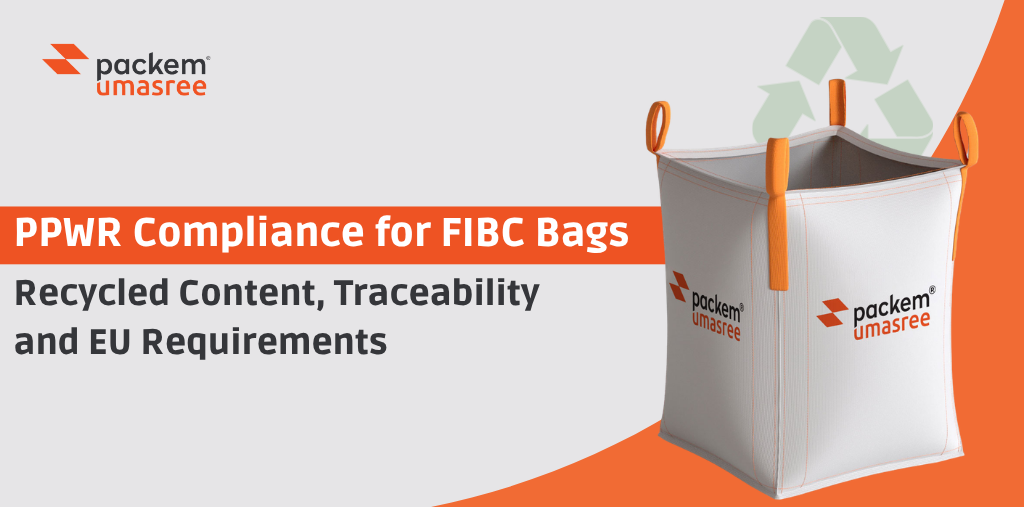
For companies that manufacture, import, fill or use Flexible Intermediate Bulk Containers (FIBCs) in Europe, packaging compliance is entering a new phase. The EU Packaging and Packaging Waste Regulation (PPWR), Regulation (EU) 2025/40, is designed to reduce packaging waste, improve recyclability, expand reuse and increase the use of recycled materials across the European market.The Regulation entered into force on 11 February 2025 and has applied from 12 August 2026. That makes PPWR compliance for FIBC bags a practical issue for manufacturers, exporters, importers and industrial buyers. It can influence bag design, raw material selection, documentation, traceability and reuse systems.Because FIBCs are used for chemicals, minerals, agricultural products, food ingredients, construction materials and many other bulk products, there is no single compliance answer for every bag. Requirements can vary according to material, application and how the packaging moves through the EU supply chain.
What Does PPWR Mean for FIBC Bags?
PPWR replaces the previous EU Packaging and Packaging Waste Directive with directly applicable rules across EU Member States. Its aim is to move packaging towards a more circular model by reducing unnecessary packaging, improving design for recycling, increasing recycled content and encouraging reuse.FIBCs sit directly within this conversation. PPWR specifically refers to intermediate bulk containers, including flexible formats, within its transport packaging reuse provisions.For FIBC manufacturers and buyers, four areas deserve particular attention:
Recycled content in plastic packaging
Design for recyclability
Identification and traceability
Reuse requirements for transport packaging
These areas are connected. The future ready FIBC will need to deliver industrial performance while also supporting circularity and verifiable compliance.
Recycled Content Requirements for Plastic FIBC Packaging
One of the biggest changes under PPWR is the shift towards post consumer recycled plastic.Under Article 7, by 1 January 2030, or three years after the relevant implementing act enters into force if that is later, plastic packaging must meet minimum recycled content levels.For plastic packaging outside the specifically listed contact sensitive packaging and beverage bottle categories, PPWR establishes a 35% minimum recycled content target. By 2040, this increases to 65%. The percentages are based on recycled content recovered from post consumer plastic waste.For many conventional plastic FIBC applications, this general category may therefore become highly relevant.However, businesses should not automatically apply these percentages to every FIBC.PPWR includes exemptions and special conditions. Packaging used for transporting dangerous goods is among the categories excluded from Article 7 recycled content obligations. Food contact packaging can also require a different assessment where the required quantity of recycled material could create a health risk or result in non compliance with EU food contact requirements.The practical lesson for buyers is simple: evaluate PPWR compliance according to the application, not only according to the bag type.
Why Post Consumer Recycled Content Matters
PPWR specifically focuses on recycled content recovered from post consumer plastic waste. For buyers, this makes the origin and verification of recycled materials increasingly important.Procurement teams may need clearer answers to questions such as:
Where did the recycled feedstock originate?
Is it genuinely post consumer material?
How is recycled content calculated?
What documentation supports the recycled content claim?
Can the supplier maintain reliable material information across production?
The European Commission is required to establish a methodology for calculating and verifying recycled content, together with the format for supporting technical documentation.This regulatory direction also increases interest in circular material solutions such as rPET FIBC bags.Packem Umasree produces FIBC/Jumbo Bags using recycled PET derived from post consumer recycled PET bottles through its “Bottle to Bag” concept, transforming recovered plastic into high performance bulk packaging.
FIBC Traceability Will Become More Important
PPWR compliance for FIBC bags is not only about achieving a percentage of recycled material. Businesses also need the ability to identify packaging and support conformity through appropriate documentation.Manufacturers must ensure packaging bears a type, batch or serial number, or another element allowing identification. Where the nature or size of the packaging makes this impractical, the information may be supplied through accompanying documentation.Manufacturer identification and contact information must also be available on the packaging, through a QR code or another data carrier, or through accompanying documents where permitted.For industrial FIBC supply chains, stronger traceability can connect bags with information such as:
Manufacturing batch
Material composition
Recycled content evidence
Product specifications
Intended application
Reuse status
Supporting conformity documentation
Good traceability provides benefits beyond regulation. It can make customer audits, quality investigations, sustainability reporting and supplier management easier and more transparent.
Labelling and Digital Information Under PPWR
PPWR also introduces harmonised packaging labelling requirements.From 12 August 2028, or 24 months after the relevant implementing acts enter into force if later, packaging placed on the EU market will generally need a harmonised label providing information about its material composition to support correct sorting.Reusable packaging will also be supported by QR codes or other standardised digital data carriers containing information about reuse systems and helping facilitate the tracking of trips and rotations.For FIBCs moving between production plants, warehouses, fillers, customers and recovery locations, digital identification could become particularly useful for connecting physical packaging with its material, batch and reuse information.
Design for Recycling: The Next FIBC Priority
PPWR does not stop at asking how much recycled material goes into packaging. It also considers whether packaging can be effectively recycled when it reaches the end of its useful life.From 2030, packaging recyclability will be assessed using design for recycling criteria and recyclability performance grades. Packaging that falls below the required recyclability threshold can be considered technically non recyclable and ultimately face restrictions on the EU market.For FIBC manufacturers and buyers, this means looking beyond the main woven fabric.Components that may influence recycling include:
Inner liners
Coatings
Printing and inks
Labels
Closures
Sewing components
Mixed material accessories
The objective is to balance strength, containment and barrier performance with a construction that supports efficient material recovery.This could make simplified constructions, compatible components and carefully engineered recycled material solutions increasingly important as PPWR requirements develop.
Reuse Targets and FIBC Transport Packaging
Reuse is particularly relevant for FIBCs used as transport packaging.From 1 January 2030, economic operators using covered forms of transport packaging within the EU, including intermediate bulk containers and flexible formats, must ensure that at least 40% of such packaging in total is reusable within a reuse system. From 2040, operators are expected to endeavour to reach at least 70%.PPWR also contains stricter reuse rules for certain movements, including transport between sites belonging to the same operator or linked or partner companies and certain deliveries within one Member State. Specific exemptions apply to defined applications, including certain dangerous goods transport.European Commission guidance published in 2026 specifically uses bulk materials transported in reusable flexible intermediate bulk carrier bags as an example of an application where reuse can be feasible.A reusable FIBC, however, is not simply a stronger single use bag.A practical reuse system may need collection, inspection, reconditioning, redistribution and rotation tracking. The packaging design and the logistics system therefore need to work together.
How FIBC Buyers Can Prepare for PPWR Compliance?
Waiting until major 2030 requirements arrive could create unnecessary procurement and supply chain pressure. Businesses using FIBCs in Europe can begin preparing now.Start by mapping your current FIBC portfolio. Record the polymer, bag construction, liner, intended contents, food contact status, dangerous goods status, single use or reusable design and destination market.Next, request structured technical and sustainability information from suppliers. Recycled content claims should be supported with suitable documentation rather than treated simply as marketing statements.It is also worth reviewing the entire bag for recyclability. Liners, coatings, labels, inks and mixed material components can all affect the recyclability of the complete packaging.For reusable applications, assess whether reuse is operationally realistic. Consider collection points, bag inspection, cleaning or reconditioning requirements, rotation tracking and what happens when the FIBC reaches the end of its reusable life.Finally, continue monitoring PPWR implementing and delegated acts. Some calculation methodologies, labelling specifications and technical criteria will become more detailed as implementation progresses.
What PPWR Means for the Future of Sustainable FIBC Packaging?
PPWR is moving European packaging beyond a simple “use less plastic” conversation. Recycled content, recyclability, reuse and traceability are becoming interconnected considerations across the packaging lifecycle.For FIBC users, early preparation can reduce future compliance pressure while supporting procurement goals around circularity, material recovery and transparent supply chains. It also gives businesses an opportunity to rethink bulk packaging around measurable sustainability rather than one time use alone.If your business is preparing for PPWR requirements or looking for more sustainable bulk packaging for European and global supply chains, explore Packem Umasree’s 100% sustainable FIBC bags made from rPET. Connect with Packem Umasree to discuss your application, material requirements and sustainability goals and discover a high performance FIBC solution designed for the future of circular bulk packaging.