Plastic packaging is under closer scrutiny than ever before. For businesses operating in India, sustainability claims are increasingly expected to be backed by measurable data, verifiable recycled content and clear records across the supply chain. This is where EPR for plastic packaging in India becomes more than a regulatory requirement. It becomes a practical framework for improving material accountability and supporting a more circular packaging system.Extended Producer Responsibility, or EPR, places responsibility on eligible producers, importers and brand owners for the plastic packaging they introduce into the market. At the same time, India’s Plastic Waste Management framework is pushing businesses to look beyond end-of-life collection. Recycled content, reuse, recycling, reporting and traceability are becoming increasingly important parts of packaging compliance.For companies using Post-Consumer Recycled material, or PCR, one question is becoming especially important: can the recycled-content claim be traced and supported from source to finished packaging?
Understanding EPR for Plastic Packaging in India
EPR for plastic packaging in India operates under the Plastic Waste Management Rules, 2016 and subsequent amendments. The framework places obligations on relevant Producers, Importers and Brand Owners (PIBOs), while Plastic Waste Processors (PWPs) play an important role in processing plastic waste and generating EPR certificates.To support implementation, the Central Pollution Control Board (CPCB) developed an online EPR system for plastic packaging. The earlier centralized Plastic EPR Portal was discontinued on 28 June 2026, with registered data migrated to the government’s Common EPR Portal. The Common EPR Portal now provides a centralized platform for EPR-related registration and compliance activities. The portal creates greater visibility across the EPR chain by connecting information submitted by different stakeholders. Depending on the stakeholder category, information can include packaging and waste-related details, procurement, production and sales transactions, processing information, EPR certificates and annual returns. CPCB’s portal documentation also provides for transaction-level records and monitoring of activities between obligated entities and Plastic Waste Processors. The main stakeholder categories include:
Producer: An entity manufacturing plastic packaging or products covered by the applicable EPR framework.
Importer: An entity importing products or packaging covered by the applicable requirements.
Brand Owner: A person or company selling commodities under a registered brand label or trademark.
Plastic Waste Processor (PWP): A registered entity involved in processing plastic waste through permitted processes and supporting the generation or transfer of EPR certificates.
In practical terms, the system creates a traceable flow of information from input to output. For example, records relating to procurement or incoming material can be connected with production or processing data, sales or dispatch information and, where applicable, EPR certificates. This helps create an auditable trail instead of relying only on a standalone declaration.For businesses, this means EPR compliance is not simply about obtaining registration. The accuracy, consistency and traceability of the data submitted through the system and the supporting records maintained by the business also matter.
Why This Approach Matters
This approach directly addresses the key requirements of the EPR framework by covering:
The government EPR portal and its current Common EPR Portal structure
The roles of Producers, Importers, Brand Owners and Plastic Waste Processors
The flow of information from inputs to processing or production and final outputs
Transaction-level traceability across relevant stakeholders
The connection between business records and EPR certificate fulfilment
The importance of maintaining accurate, consistent and auditable compliance records
Why PCR Is Becoming Central to Plastic Packaging Compliance
PCR stands for Post-Consumer Recycled material. It is made from plastic that has already completed a consumer-use cycle, such as used bottles or discarded packaging, and is then collected, sorted, processed and converted into material suitable for a new application.Using PCR can reduce dependence on virgin plastic and keep existing material in circulation for longer. From an EPR perspective, recycled content is also becoming a measurable compliance area.Under the Plastic Waste Management (Amendment) Rules, 2026, mandatory recycled plastic content targets for FY 2026–27 are:
Category I: 40%
Category II: 10%
Category III: 5%
The rules also provide exemptions where recycled plastic use is not permitted under applicable laws, regulations, mandatory Indian Standards or requirements of relevant statutory bodies.For packaging buyers, this changes the conversation. Asking a supplier whether a product “contains recycled plastic” is no longer enough. Buyers increasingly need to understand how much recycled material is used, where it comes from and what documentation supports the claim.
What Does PCR Traceability Mean?
PCR traceability means being able to follow recycled material through the supply chain with enough evidence to support the recycled-content claim.A simplified material journey may look like this:Post-consumer plastic waste → collection and sorting → recycling → recycled raw material → packaging production → finished packagingAt each stage, the material changes form. Without a clear record trail, it can become difficult to demonstrate whether the material used in finished packaging genuinely originated from post-consumer waste.Good traceability depends on connected records rather than one certificate. Useful evidence can include supplier declarations, purchase documents, batch information, recycled-material specifications, production records, quality checks and third-party certification.The claim made about the packaging should ultimately match the evidence behind it.
Why Traceability Matters for EPR Compliance
Traceability helps reduce one of the biggest risks in recycled-content compliance: a gap between what is declared and what can actually be demonstrated.When packaging data is spread across different teams, inconsistencies become more likely. Strong traceability helps a business answer practical questions:
Where was the PCR material sourced?
Is it genuinely post-consumer recycled?
Which production batches used the recycled input?
What percentage of the final packaging is recycled content?
Can the claim be supported during an audit or customer review?
For businesses purchasing packaging at scale, these are also important procurement and risk-management questions.
Understanding Plastic Packaging Categories
Correct classification is another important part of EPR for plastic packaging in India.
Category I – covers rigid plastic packaging.
Category II – covers flexible plastic packaging made from a single layer or multiple layers of plastic.
Category III – covers multilayered plastic packaging containing at least one layer of plastic and at least one layer of another material.
Category IV – covers plastic sheets or similar packaging and carry bags made from compostable plastics.
Why does this matter?Targets and obligations can vary according to the packaging category. Incorrect classification may therefore lead to inaccurate calculations or reporting.Industrial packaging users should map packaging formats, liners and material combinations before preparing EPR data.
How to Build a Strong PCR Documentation System
A practical PCR traceability system should be simple and consistent.Start by identifying the recycled resin, flakes, yarn, fabric or other input used in the packaging and linking it to supplier documentation.Maintain production information that connects recycled raw material with finished packaging, and base recycled-content claims on a defined calculation method and reliable production data.Supporting records should also be easy to retrieve and reconcile.Including PCR traceability requirements in supplier specifications can move compliance upstream instead of trying to collect evidence after packaging has already been purchased.This approach also allows procurement teams to evaluate sustainable packaging based on verifiable material information, rather than relying only on general environmental claims.
The Role of Certification in PCR Traceability
Third-party certification can strengthen recycled-material claims by providing an independent framework for recycled-content verification, chain of custody or material traceability.Standards and certification systems such as the Global Recycled Standard (GRS), ISCC PLUS and EN 15343 can support different aspects of recycled-content credibility, depending on the product, process and certification scope.Certification should complement, not replace, accurate internal records.Packem Umasree uses certified Post-Consumer Recycled materials supported by recognized standards including GRS, ISCC PLUS and EN 15343, helping provide greater transparency around recycled material use and documentation.
From PCR Bottles to rPET FIBC Packaging
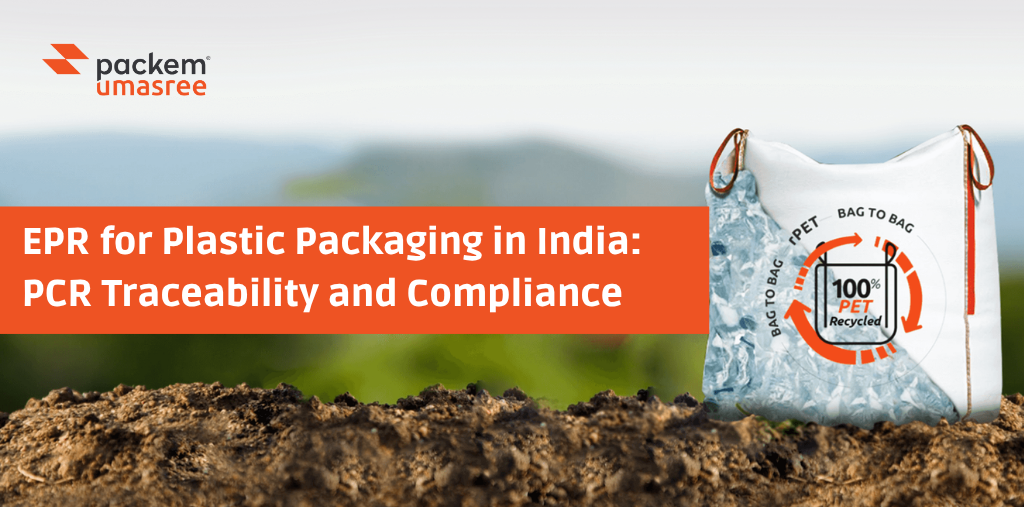
PCR traceability is especially relevant in industrial bulk packaging, where businesses may use large packaging volumes and face growing sustainability expectations.Packem Umasree follows a Bottle-to-Bag approach that connects post-consumer PET waste with the production of recycled PET FIBC and jumbo bags. The process involves sourcing post-consumer PET bottles, converting them into rPET flakes and transforming the recycled material into high-performance packaging fabric. The journey can be understood as:Used PET bottles → rPET flakes → packaging fabric → FIBC/Jumbo BagThis approach creates a clear material pathway from post-consumer waste to finished industrial packaging. For buyers, this connection can provide greater visibility into the origin and processing of recycled material used in their packaging.By integrating recycled PET into FIBC and jumbo bag manufacturing, the Bottle-to-Bag model offers businesses an option to incorporate recycled content into their industrial packaging strategy while supporting material circularity.
PCR Traceability as a Business Advantage
Strong PCR traceability can support more than regulatory compliance.Customers, multinational buyers and procurement teams increasingly request evidence behind recycled-content claims. Sustainability teams need dependable data for environmental and ESG reporting, while export-oriented businesses may need to respond to different customer and market requirements.A traceable packaging supply chain can make sustainability information easier to use across:
Supplier assessments
Procurement decisions
Customer sustainability questionnaires
Audits
ESG reporting
Recycled-content declarations
Packaging improvement programmes
It can also help businesses base future packaging targets on measurable material data instead of assumptions.EPR compliance and sustainable packaging strategy are therefore increasingly connected.
What Should Packaging Buyers Ask Suppliers?
Before selecting PCR-based plastic packaging, businesses should look beyond a simple “recycled” label.Ask what percentage of the packaging contains recycled material and whether that recycled input comes from post-consumer or post-industrial sources.Find out how the material origin is verified and whether production or batch records are maintained.Buyers should also understand which certifications support the recycled-content claim and whether the packaging continues to meet the strength, quality and performance requirements of the intended application.Another important question is whether the supplier can provide suitable documentation for internal sustainability, procurement or compliance reporting.These questions help transform sustainable packaging from a broad environmental promise into a more transparent and verifiable purchasing decision.
The Future of EPR and PCR Packaging in India
India’s plastic packaging framework is moving toward greater circularity and accountability. The Plastic Waste Management (Amendment) Rules, 2026 reinforce the importance of recycled plastic content, introduce further provisions around recycled packaging and continue the broader shift toward measurable material responsibility.For businesses, the direction is becoming clear: packaging decisions should increasingly consider compliance, recyclability, recycled content and traceability together.PCR traceability provides the evidence layer that turns recycled-content commitments into measurable action. When material origin, processing and finished packaging are connected through credible records, sustainability becomes easier to verify and manage.As EPR for plastic packaging in India continues to evolve, businesses that build transparent PCR supply chains today can be better prepared for future compliance requirements and growing customer expectations. Packem Umasree supports this transition through its Bottle-to-Bag model, transforming post-consumer PET bottles into 100% Sustainable FIBC bags made from rPET with a focus on circularity, traceability and responsible industrial packaging. Explore Packem Umasree’s sustainable packaging solutions and speak with our team about how recycled PET bulk bags can support your packaging, compliance and sustainability goals.