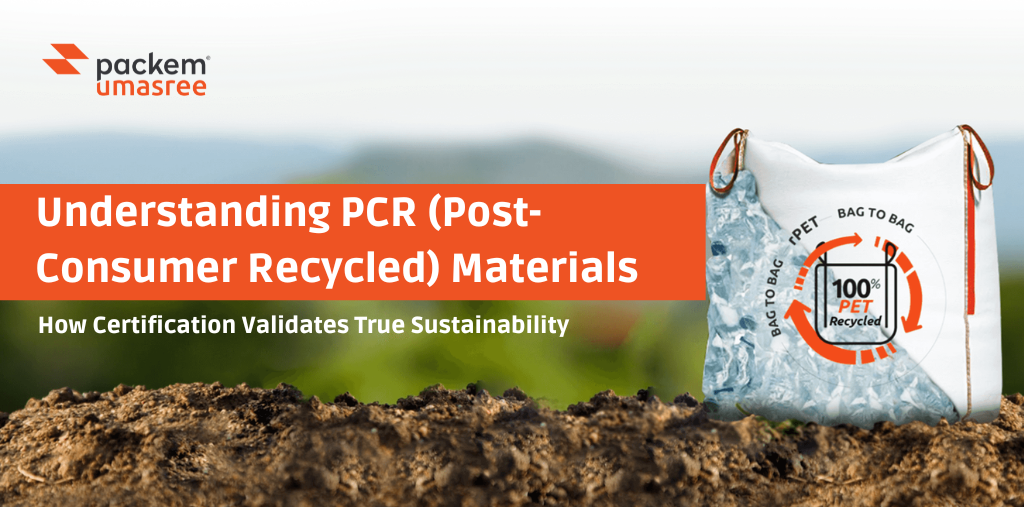
Sustainability claims in packaging have increased rapidly across global industries. However, buyers, regulators, and procurement teams now demand verifiable proof that recycled materials genuinely originate from post-consumer sources. Understanding PCR (Post-Consumer Recycled) materials is essential for businesses that rely on sustainable packaging and need full transparency across their supply chains.Packem Umasree uses certified Post-Consumer Recycled (PCR) materials supported by globally recognized standards, including EN 15343, GRS, and ISCC PLUS, ensuring traceability, authenticity, and compliance with international sustainability requirements. These certifications validate that recycled content claims are not marketing statements but verified manufacturing practices.This article explains what PCR materials are, why certification matters, and how certified PCR systems strengthen trust in sustainable FIBC manufacturing.
What Are PCR (Post-Consumer Recycled) Materials?
Post-Consumer Recycled (PCR) materials originate from products that consumers have already used and discarded. Recycling systems collect these materials, process them into reusable raw materials, and convert them into new products without returning them to landfill or incineration streams.In packaging manufacturing, PCR materials typically include:
Used PET bottles collected from waste streams
Household plastic waste recovered through recycling systems
Consumer packaging waste redirected into circular production systems
Unlike industrial scrap or post-industrial (PIR) waste, PCR materials represent real post-use materials that have completed their original lifecycle.In advanced circular manufacturing models, PET bottles are collected, sorted, cleaned, processed into recycled flakes, converted into tapes, woven into fabric, and finally transformed into durable industrial packaging solutions such as FIBC bags.This complete circular approach supports global sustainability targets and reduces dependence on virgin plastic materials.
PCR vs Post-Industrial Recycled (PIR): Understanding the Difference
Not all recycled materials carry the same environmental value. Many products use post-industrial recycled (PIR) content, which consists of industrial scrap generated during manufacturing processes. Post-industrial recycled (PIR), also commonly referred to as pre-consumer recycled material, includes:
Production trimming waste
Factory scrap materials
Unused industrial leftovers
While recycling post-industrial waste improves manufacturing efficiency, it does not significantly reduce post-consumer plastic waste.PCR materials deliver a much higher sustainability impact because they:
Divert plastic waste from landfills
Reduce environmental pollution
Support circular economy systems
Lower dependence on virgin petroleum-based materials
For procurement teams evaluating sustainable packaging suppliers, distinguishing between PCR and post-industrial recycled (PIR) content is critical.
Why PCR Traceability Matters in Sustainable Packaging?
As sustainability regulations expand globally, traceability has become a central requirement for recycled-content packaging. Buyers must confirm that recycled materials originate from legitimate post-consumer sources and that manufacturers maintain strict controls throughout production.Traceability ensures:
Verified recycled content claims
Controlled material sourcing
Documented supply chain transparency
Regulatory compliance across export markets
Without traceability, recycled claims cannot be validated reliably.Manufacturers that implement certified PCR systems maintain documented material flow records from raw waste collection to final packaging output. This documentation enables verification by auditors, regulators, and customers.Traceability is not optional. It is a foundational requirement in modern sustainable packaging systems.
The Role of Certification in PCR Validation
Independent certification frameworks provide objective validation of PCR usage. These frameworks assess sourcing practices, manufacturing controls, chain-of-custody systems, and recycled content verification.Certifications ensure:
Authentic use of post-consumer materials
Controlled recycling processes
Verified recycled content percentages
Compliance with sustainability standards
Without recognized certification, recycled claims remain difficult to validate in international trade environments.Packem Umasree operates with certification-backed PCR systems that align with internationally recognized standards designed to validate recycled material integrity.
EN 15343 Certification: Ensuring Recycled Plastic Traceability
EN 15343 is a European standard designed to ensure traceability and conformity of recycled plastics throughout the supply chain.This certification focuses on:
Traceability of recycled plastic materials
Quality assurance processes
Documentation of material origin
Control of recycling operations
EN 15343 supports reliable verification of recycled content claims by ensuring that each stage of production remains documented and auditable.For global buyers, compliance with EN 15343 demonstrates that recycled materials are not blended randomly but managed through structured traceability systems.This level of control strengthens trust in sustainable packaging suppliers.
GRS (Global Recycled Standard): Verifying Recycled Content and Social Compliance
The Global Recycled Standard (GRS) is widely recognized as one of the most comprehensive recycled material certification frameworks.GRS evaluates:
Recycled material content
Chain-of-custody documentation
Environmental management practices
Chemical usage restrictions
Social responsibility compliance
GRS certification ensures that recycled materials meet strict environmental and ethical standards.For companies sourcing sustainable packaging, GRS compliance confirms that suppliers follow responsible recycling practices supported by verified documentation.GRS certification strengthens credibility in industries that demand responsible sourcing and sustainability transparency.
ISCC PLUS Certification: Supporting Circular Economy and Sustainable Supply Chains
ISCC PLUS certification supports sustainable and circular material flows across multiple industries.This certification verifies:
Sustainable raw material sourcing
Transparent supply chain documentation
Traceable material conversion processes
Compliance with circular economy frameworks
ISCC PLUS is particularly valuable in global trade environments where sustainability reporting and carbon reduction initiatives influence supplier selection.Certification under ISCC PLUS demonstrates commitment to long-term sustainability and verified recycled content integrity.
How Certified PCR Materials Strengthen Industrial Packaging Reliability?
Certified PCR materials do not compromise performance. Modern recycling technology enables manufacturers to convert post-consumer materials into high-performance industrial-grade materials suitable for demanding logistics environments.Certified PCR materials provide:
Reliable mechanical strength
Consistent material quality
Stable packaging performance
Long-term durability in industrial transport
When supported by proper certification and controlled production methods, PCR-based packaging achieves comparable performance to conventional materials while delivering sustainability benefits.This combination of performance and sustainability drives increasing demand for certified recycled packaging solutions.
The Bottle-to-Bag Model: Transforming Waste into Industrial Packaging
Circular manufacturing models play a critical role in modern sustainable packaging systems.In a bottle-to-bag approach:
Post-consumer PET bottles are collected
Materials are sorted and cleaned
PET is converted into recycled flakes
Flakes are processed into tapes
Tapes are woven into fabric
Fabric is converted into finished packaging products
This closed-loop model reduces landfill dependency and supports long-term resource recovery.By implementing bottle-to-bag manufacturing, companies transform plastic waste into valuable industrial resources.This approach strengthens environmental responsibility while maintaining industrial packaging performance.
How Packem Umasree Uses Certified PCR Materials in FIBC Manufacturing?
Packem Umasree implements certified PCR material systems supported by internationally recognized standards, including EN 15343, GRS, and ISCC PLUS.These certifications validate:
Verified post-consumer material sourcing
Controlled recycling processes
Documented chain-of-custody systems
Consistent recycled content integrity
Through structured PCR sourcing and certified traceability, Packem Umasree ensures that recycled content claims remain transparent and verifiable.This certification-backed approach supports global customers that require documented sustainability compliance in their packaging supply chains.
Why Verified PCR Usage Matters for Global Buyers?
Global industries increasingly require certified recycled content in packaging materials. Regulatory pressure and sustainability reporting frameworks continue to influence procurement decisions across multiple sectors.Verified PCR usage supports:
Regulatory compliance
ESG reporting requirements
Corporate sustainability targets
Waste reduction initiatives
Circular economy adoption
Buyers prioritize suppliers that provide documented proof of recycled material usage rather than unverified sustainability claims.Certified PCR packaging provides that proof.
PCR Materials and the Future of Sustainable Industrial Packaging
The demand for PCR-based packaging continues to expand across industries worldwide. Regulatory frameworks in Europe, North America, and other regions increasingly require recycled content verification and transparency.Key trends driving PCR adoption include:
Plastic waste reduction mandates
Circular economy regulations
ESG reporting frameworks
Carbon footprint reduction targets
Sustainable procurement standards
Manufacturers that invest in certified PCR systems position themselves as long-term partners for sustainability-focused supply chains.PCR materials represent a critical component of the future packaging ecosystem.
Conclusion: Building Trust Through Certified PCR Systems
PCR materials play a vital role in reducing environmental impact and supporting circular manufacturing systems. However, true sustainability depends on traceability, verification, and certification-backed production practices.By implementing internationally recognized certifications such as EN 15343, GRS, and ISCC PLUS, Packem Umasree demonstrates measurable commitment to responsible recycling and sustainable manufacturing.Certification-backed PCR usage strengthens transparency, ensures compliance, and builds long-term trust with global customers seeking verified sustainable packaging solutions.As industries move toward circular economies, certified PCR materials will remain a defining factor in responsible packaging production and sustainable supply chain development.