What are PCR (Post-Consumer Recycled) Materials?
PCR (Post-Consumer Recycled) Materials are recycled materials created from products that consumers have already used and discarded. These materials go through collection, sorting, cleaning, and recycling processes before manufacturers use them to create new products. Unlike industrial recycling, which uses unused production scraps, PCR recycling focuses on recovering materials from the consumer waste stream. Common sources of PCR materials include:- Used PET bottles
- Plastic containers
- Food and beverage packaging
- Consumer plastic products
- Household plastic waste
How are PCR Materials Made?
The process of creating PCR materials involves several important stages:1. Collection of Post-Consumer Waste
The process begins when consumers dispose of plastic products. Recycling systems collect these materials and send them to recycling facilities.2. Sorting and Cleaning
Recyclers separate plastic materials based on their type and quality. Advanced cleaning processes remove contaminants to prepare the material for reuse.3. Processing Into Recycled Material
The cleaned plastic undergoes mechanical recycling processes where it is shredded, melted, and converted into recycled raw materials such as flakes, pellets, or fibers. For PET bottles, the material can become recycled PET (rPET), which manufacturers use to produce new sustainable products.4. Manufacturing New Products
Manufacturers transform recycled materials into new products, completing the circular economy cycle. At Packem Umasree, recycled PET bottles are converted into high-performance rPET materials that help create sustainable FIBC/Jumbo Bags for industrial applications.PCR vs Virgin Materials: Understanding the Difference
Traditional manufacturing often relies on virgin materials, which come directly from newly extracted resources. While virgin materials offer consistent performance, they require additional natural resources and energy during production. PCR materials provide an alternative by utilizing existing resources.Key differences:
| PCR Materials | Virgin Materials |
|---|---|
| Made from recycled consumer waste | Made from newly produced raw materials |
| Supports circular economy | Requires new resource extraction |
| Helps reduce plastic waste | Can increase dependence on fossil-based materials |
| Gives used materials a second life | Creates new material demand |
Benefits of Using PCR (Post-Consumer Recycled) Materials
1. Reduces Plastic Waste
PCR materials help divert plastic waste away from landfills and the environment. Recycling used materials creates a productive pathway for managing plastic waste responsibly.2. Supports Circular Economy
A circular economy focuses on keeping materials in use for as long as possible. PCR recycling enables products to return into the manufacturing cycle instead of becoming waste.3. Reduces Dependence on Virgin Resources
Using recycled materials reduces the need for new raw materials, supporting more sustainable production practices.4. Helps Companies Achieve Sustainability Goals
Businesses are increasingly adopting recycled materials to meet ESG targets, improve sustainability reporting, and respond to growing environmental expectations from customers and stakeholders.5. Encourages Responsible Plastic Management
PCR demonstrates that plastic can become a valuable resource when proper collection and recycling systems are available.Applications of PCR Materials Across Industries
PCR materials are becoming increasingly popular across multiple sectors, including:Packaging Industry
Companies use PCR materials to create sustainable packaging solutions, bottles, containers, films, and industrial packaging products.Textile Industry
Recycled PET can be transformed into fibers used in sustainable textiles and fabrics.Automotive Industry
Manufacturers use recycled plastics in vehicle components to improve sustainability.Consumer Goods
Brands incorporate PCR materials into everyday products to reduce their environmental footprint.PCR Materials in Sustainable Bulk Packaging
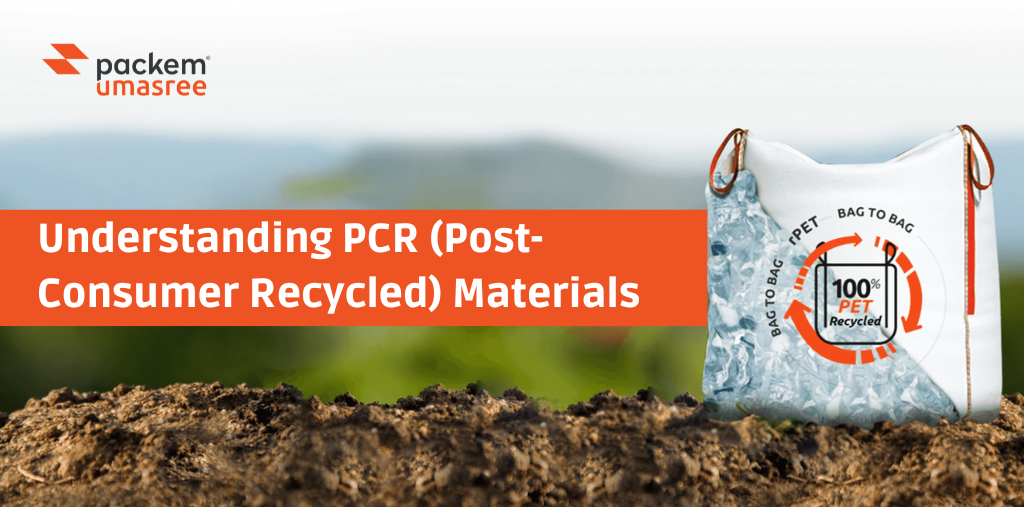
The packaging industry plays a major role in sustainability transformation. Traditional bulk packaging solutions often depend on virgin plastic materials, but PCR-based alternatives are changing the future of industrial packaging. Packem Umasree has introduced India’s first 100% Bottle-to-Bag project, producing sustainable FIBC/Jumbo Bags using 100% recycled PET sourced from post-consumer PET bottles. Our approach transforms: Used PET Bottles → Recycled PET (rPET) → Sustainable Fabric → FIBC/Jumbo Bags This innovation supports waste reduction, circularity, and responsible manufacturing while maintaining the performance required for industrial packaging applications.Why PCR Materials Matter for the Future?
Sustainability is no longer only an environmental responsibility; it has become a key business priority. Companies are looking for solutions that combine operational efficiency with reduced environmental impact. PCR materials help industries move toward:- Lower waste generation
- Improved resource efficiency
- Circular manufacturing systems
- Sustainable supply chains
- Stronger ESG performance