Sustainable packaging is no longer a trend it is the future of global supply chains. As companies shift from single-use plastics toward circular, low-impact materials, demand for eco-innovative packaging solutions is rising rapidly across industries. From agriculture and chemicals to food and construction, businesses are under pressure to reduce waste, cut emissions, and comply with tightening regulatory frameworks. In this evolving landscape, Packem Umasree is emerging as a leader in sustainable bulk packaging, leveraging recycled PET (rPET) to create high-performance, circular economy-aligned packaging solutions.
Why Sustainable Packaging Matters?
Global consumers and regulators alike are demanding a shift away from disposable plastics toward materials that can be reused or recycled in closed-loop systems. Sustainable packaging results in significant environmental benefits, including lower greenhouse gas emissions, reduced landfill waste, and a smaller reliance on virgin plastic production. This shift is not only driven by environmental consciousness but also by increasing costs associated with waste management and tighter packaging waste regulations globally.In response, industries are actively exploring recycled and recyclable materials for bulk packaging. Solutions like rPET FIBCs (Flexible Intermediate Bulk Containers)/jumbo bags demonstrate that high performance and sustainability can coexist. They are strong, have a higher UV resistance, customizable, and most importantly aligned with the goals of a circular economy.
Global Demand for Sustainable Packaging
The demand for sustainable packaging has surged as corporations integrate sustainability into core business strategies. Large multinationals are setting ambitious environmental, social, and governance (ESG) goals that require measurable reductions in plastic use and emissions. Packaging materials play a decisive role in achieving these goals. As sustainability becomes central to brand reputation and investor interest, packaging innovation naturally follows.Industries requiring bulk packaging such as grains, chemicals, minerals, and construction are particularly ripe for sustainable transformation. Industrial packaging, once dominated by virgin polypropylene and other plastics, is increasingly shifting toward recycled alternatives. Businesses now recognize that sustainable bulk packaging does not only protect products but also supports broader corporate sustainability targets.
Regulatory Landscape: From Plastic Bans to Circular Economy Mandates
Around the world, regulators are tightening laws related to plastic waste, recycled content requirements, and extended producer responsibility (EPR). Governments are moving beyond simple bans toward frameworks that enforce circular economy principles requiring materials to be collected, reused, or recycled after first use.In regions like the European Union, legislation increasingly mandates recycled content and traceability standards in packaging supply chains. These laws compel importers and manufacturers to demonstrate responsible material sourcing and recovery, favoring recyclable and reusable packaging alternatives. While India’s regulatory environment also focuses on plastic waste management and circular resource use, manufacturers are proactively adopting sustainable practices to stay ahead of future compliance requirements. The global regulatory landscape is reinforcing that packaging must evolve: from a take-make-dispose model to one where materials remain valuable and actively re-enter production cycles.
Packem Umasree: Leading the Charge
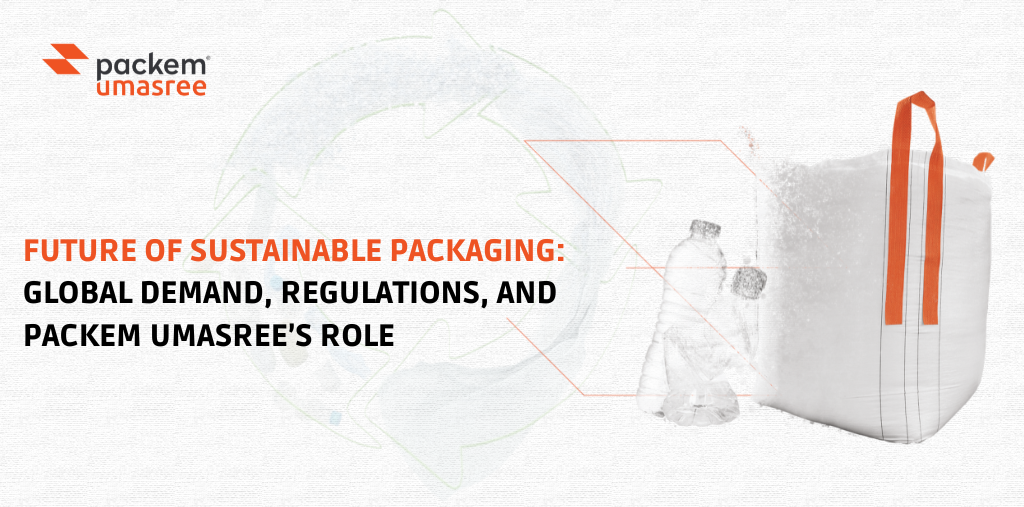
In this backdrop of rising demand and regulatory pressure, Packem Umasree is redefining sustainable packaging in India and beyond. The company established India’s first production unit dedicated to manufacturing 100% sustainable FIBC and jumbo bags from recycled PET (rPET). Packem Umasree’s approach is rooted in circular economy thinking: sourcing post-consumer recycled (PCR) PET bottles, converting them into recycled PET flakes, and transforming these flakes into high-performance packaging fabrics. This closed-loop “Bottle-to-Bag” model diverts plastic waste from landfills and channels it back into industrial use.The company produces a range of sustainable bulk packaging products including:
U-Panel Bags – Strong, stable base for heavy loads
Circular Bags – Seamless design for fine materials
Baffle Bags – Internal support for shape retention and efficient stacking
Single Loop Bags – Simplified handling for mechanized systems
These rPET-based FIBC bags offer superior load bearing, excellent UV resistance, and high durability, making them ideal for industries that require reliable and sustainable solutions.
Driving Sustainability with Real Impact
Packem Umasree’s work extends beyond manufacturing; it contributes to local economic and environmental goals. By embracing sustainable production methods, the company supports India’s “Make in India” vision, creates skilled employment opportunities, and strengthens the country’s position as a global hub for eco-innovative packaging solutions. The environmental impact of this model is significant:
Reduced Plastic Waste – Post-consumer PET bottles are reused rather than discarded.
Lower Carbon Footprint – Up to 50% lower carbon footprint than regular FIBC production.
Promotion of Circularity – Materials are continuously cycled back into production loops.
Additionally, the company’s participation in global trade shows and export initiatives underscores its ambition to export sustainable packaging and educate global markets about circular practices.
Meeting the Needs of Modern Industries
Industrial buyers today expect packaging solutions that align with both performance and sustainability metrics. Packem Umasree’s rPET FIBC bags address these requirements by combining environmental responsibility with operational benefits.For example, baffle FIBC bags made from rPET not only reduce environmental impact but also deliver practical advantages such as efficient storage, reduced bulging, and enhanced stacking capability boosting logistics efficiency while supporting circular economy goals.The flexibility of rPET packaging products from U-panel to baffle designs makes them suitable for a wide range of sectors:
Agriculture & grains
Cement & construction materials
Chemicals & minerals
Food ingredients & FMCG
Export packaging and logistics
By delivering both sustainability and performance, these solutions help businesses achieve compliance with global environmental standards while strengthening brand reputation among conscious consumers.
Future Outlook: Sustainability as Standard
Looking ahead, the future of sustainable packaging will be shaped by even stronger regulatory standards, greater adoption of circular systems, and rising customer expectations for eco-friendly products. Packaging will no longer be measured solely by performance or price, but by its ability to support environmental goals and deliver measurable impact.Companies like Packem Umasree exemplify how the packaging industry can innovate responsibly turning waste into value and transforming supply chains sustainably. By championing rPET-based bulk packaging solutions, they are helping industries reduce reliance on virgin materials, cut emissions, and transition to a circular economy.The future of sustainable packaging is not just about compliance; it is about building resilience, reducing environmental harm, and aligning commercial success with planetary well-being.
Conclusion
Sustainable packaging is evolving quickly under the influence of global demand, environmental regulations, and shifting customer expectations. The transition from linear models toward true circular economy practices underscores this change. Through its innovative Bottle-to-Bag rPET FIBC solutions, Packem Umasree is helping industries embrace sustainability without compromising performance. By transforming post-consumer PET into high-quality bulk packaging, the company is paving the way for a greener, more circular future.