Global supply chains are undergoing one of the most significant transformations in modern industrial history. As environmental regulations tighten and businesses adopt responsible sourcing practices, sustainable industrial packaging is no longer viewed as an optional initiative it has become a strategic necessity.
From manufacturing plants to international logistics networks, companies are rethinking how materials are packed, transported, and reused. The future of industrial packaging lies in solutions that balance performance, sustainability, and operational efficiency. Today, innovations in
sustainable bulk packaging, recyclable materials, and circular economy models are reshaping how industries move goods worldwide.
This shift is not only reducing environmental impact but also improving supply chain resilience, cost efficiency, and brand credibility.
Why Sustainability Is Driving Industrial Packaging Innovation?
Industrial packaging historically focused on durability and cost-effectiveness. However, growing environmental concerns and global ESG commitments have changed purchasing priorities.
Businesses now face increasing pressure from:
- Environmental regulations and compliance standards
- Customer demand for eco-friendly products
- Corporate sustainability goals
- Carbon footprint reduction targets
- Responsible waste management policies
As a result, sustainable industrial packaging solutions are gaining rapid adoption across industries, including chemicals, agriculture, food processing, construction, and manufacturing.
Organizations are moving away from single-use packaging toward reusable, recyclable, and resource-efficient alternatives that support long-term sustainability goals.
Trend 1: Circular Economy Packaging Models
One of the most influential trends shaping global supply chains is the transition toward a circular economy.
Unlike traditional linear models produce, use, discard circular packaging focuses on keeping materials in continuous use through recycling and reuse. Modern industrial packaging now incorporates:
- Recycled raw materials such as rPET-based fabrics
- Closed-loop manufacturing processes
- Reusable bulk bags and liners
- Packaging designed for recyclability
Circular solutions reduce dependency on virgin plastics while minimizing industrial waste. Companies adopting circular packaging strategies also benefit from improved regulatory compliance and stronger environmental credentials.
Trend 2: Rise of Recycled Materials in Bulk Packaging
Recycled materials are transforming the performance perception of industrial packaging. Earlier concerns regarding durability have been addressed through advanced manufacturing technologies.
Today’s sustainable bulk packaging solutions offer:
- High tensile strength comparable to virgin materials
- Improved abrasion resistance
- Enhanced UV stability
- Long lifecycle usability
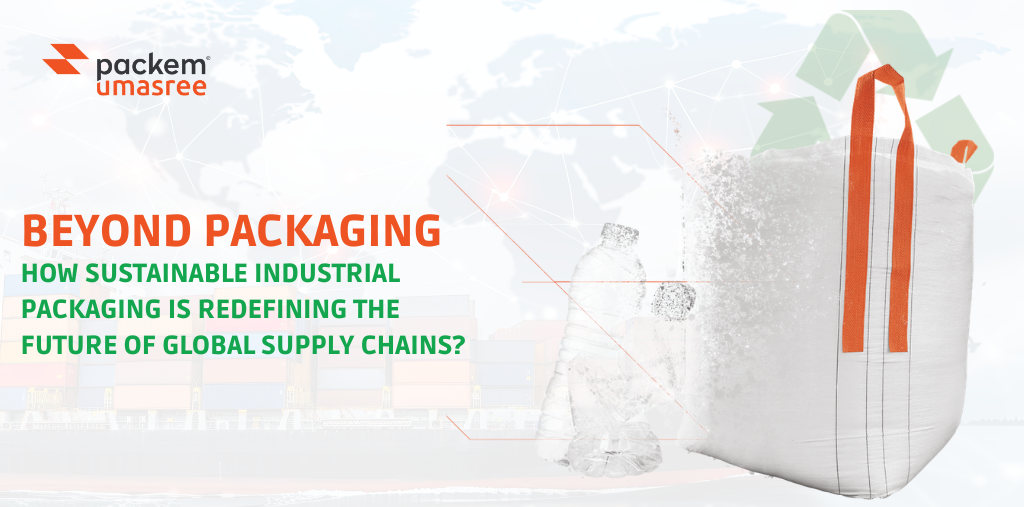
Recycled PET (rPET) packaging, created from post-consumer plastic bottles, has become a leading innovation. This “Bottle-to-Bag” approach supports resource conservation while delivering reliable industrial performance.
For global supply chains, this means reduced environmental impact without compromising packaging safety.
Trend 3: Lightweight Packaging for Logistics Optimization
Transportation emissions represent a major portion of supply chain carbon footprints. One emerging solution is lightweight industrial packaging engineered for maximum efficiency.
Modern packaging designs focus on:
- Reduced material consumption
- Higher load optimization
- Improved container utilization
- Lower fuel consumption during transport
Lightweight yet strong packaging allows businesses to ship more products using fewer resources. This not only reduces environmental impact but also lowers logistics costs a critical advantage in competitive global markets.
Trend 4: Smart Design for Storage Efficiency
Warehousing and logistics efficiency are becoming key drivers behind packaging innovation.
New-generation industrial packaging solutions prioritize:
- Shape stability for stacking efficiency
- Space optimization within containers
- Reduced product spillage
- Improved handling safety
Form-stable bulk bags and engineered liners help companies maximize storage capacity while minimizing operational risks. Efficient packaging directly impacts supply chain productivity by reducing handling time and improving warehouse management.
Trend 5: Certification and Transparency in Sustainable Packaging
As sustainability claims increase, buyers are demanding proof rather than promises. Certifications and lifecycle assessments now play a crucial role in supplier evaluation.
Key sustainability indicators include:
- Verified recycled content standards
- Life Cycle Assessment (LCA) validation
- Carbon disclosure reporting
- International environmental certifications
These frameworks help procurement teams identify genuinely responsible manufacturers and avoid greenwashing. Transparency has become a competitive advantage within modern supply chains.
Trend 6: Customization and Industry-Specific Packaging Solutions
Industrial sectors have unique packaging requirements depending on product characteristics, handling conditions, and safety regulations.
The future of sustainable industrial packaging lies in customization, including:
- Food-grade packaging for agricultural products
- Antistatic solutions for chemicals
- Barrier liners for moisture-sensitive materials
- Heavy-duty packaging for mining and construction
Tailored packaging reduces waste, improves efficiency, and ensures compliance across industries.
Trend 7: Sustainability as a Competitive Business Advantage
Sustainability is no longer solely about environmental responsibility it directly influences business growth.
Companies adopting eco-friendly packaging benefit from:
- Stronger brand reputation
- Increased customer trust
- Easier compliance with global regulations
- Improved investor confidence
- Long-term operational savings
Global buyers increasingly prefer suppliers aligned with sustainable practices, making green packaging a strategic differentiator.
How Sustainable Packaging Strengthens Global Supply Chains?
Sustainable packaging contributes to supply chain resilience in several ways:
- Reduces dependency on finite resources
- Minimizes waste management costs
- Improves logistics efficiency
- Enhances product protection
- Supports international compliance standards
By integrating sustainability into packaging decisions, businesses build more adaptable and future-ready supply networks.
Challenges and Opportunities Ahead
While adoption continues to grow, companies still face challenges such as initial investment costs and supplier evaluation complexities. However, technological advancements and economies of scale are rapidly making sustainable packaging more accessible.
Future developments are expected to include:
- Advanced recyclable polymers
- AI-driven material optimization
- Greater supply chain transparency
- Expanded recycling infrastructure
These innovations will further accelerate the shift toward environmentally responsible industrial packaging.
Conclusion
The future of global supply chains is inseparable from the evolution of
sustainable industrial packaging. Businesses worldwide are recognizing that packaging must do more than protect products it must also protect the planet.
From recycled materials and circular manufacturing to certified sustainability practices and logistics optimization, industrial packaging is entering a new era of innovation. Companies that embrace these trends today will gain operational efficiency, regulatory readiness, and long-term competitive advantage.
Sustainable packaging is no longer just a trend it is the foundation of resilient and responsible global commerce.
Partner with Packem Umasree to adopt innovative, sustainable industrial packaging solutions designed for performance, compliance, and a greener future.