Why Industry-Specific Packaging Matters More Than Ever?
Packaging does much more than hold a product. In industrial sectors, it protects valuable materials, supports safe handling, simplifies transportation, and helps businesses maintain product quality from production facilities to end users.
However, not every industry has the same packaging needs. Agricultural products face challenges such as moisture, contamination, and long-term storage. Chemical materials require secure containment and reliable handling. Construction materials demand strength and durability to withstand harsh environments and heavy loads.
As supply chains become more complex and sustainability becomes a business priority, selecting the right
bulk packaging solution has become a strategic decision rather than a simple operational requirement.
This guide explains the unique packaging demands of agriculture, chemical processing, and construction sectors and how businesses can choose solutions that improve efficiency, safety, and environmental performance.
Understanding Bulk Packaging for Industrial Applications
Industrial products often move in large volumes across multiple locations before reaching their final destination. Packaging must therefore perform several critical functions:
- Protect products during storage and transportation
- Support safe loading and unloading
- Prevent product loss and contamination
- Improve warehouse efficiency
- Reduce handling costs
- Meet sustainability goals
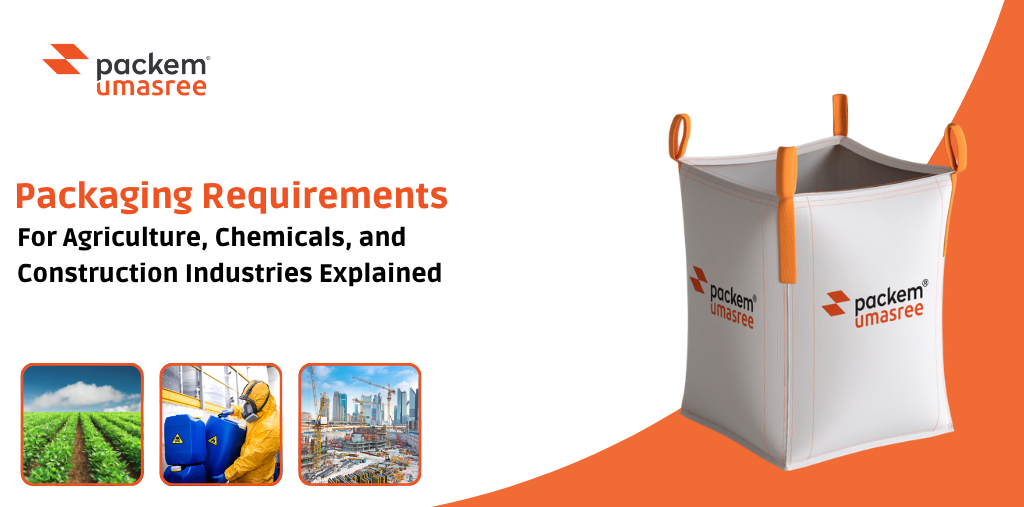
Flexible Intermediate Bulk Containers (FIBCs), commonly known as jumbo bags, have become one of the most widely used solutions for industrial packaging because they offer strength, flexibility, and cost-effective logistics.
Different industries, however, require different specifications depending on the nature of the material being transported.
Packaging Requirements in the Agriculture Industry
Agriculture remains one of the largest users of bulk packaging worldwide. Products such as grains, seeds, animal feed, sugar, fertilizers, and agricultural minerals are often transported and stored in large quantities.
1. Protection Against Moisture
Agricultural products are highly sensitive to environmental conditions. Excess moisture can reduce product quality, encourage spoilage, and lead to financial losses.
Packaging used for agricultural materials should help maintain product integrity throughout storage and transportation while minimizing exposure to external conditions.
2. Efficient Handling During Harvest Seasons
During peak harvesting periods, businesses must move large quantities of materials quickly. Packaging should support easy filling, stacking, transportation, and unloading.
Well-designed bulk bags improve operational efficiency and reduce handling time across the supply chain.
3. Product Cleanliness and Quality Preservation
Contamination can significantly impact agricultural products. Packaging solutions must help maintain cleanliness throughout logistics operations.
Manufacturers increasingly prefer high-quality bulk packaging that supports consistent product protection while meeting customer expectations.
4. Sustainability Considerations
Agricultural businesses are under growing pressure to reduce environmental impact. Recyclable and recycled-material packaging options are becoming increasingly attractive for companies looking to support sustainability initiatives while maintaining operational performance.
Businesses exploring environmentally responsible packaging can learn more about
sustainable bulk packaging solutions through Packem Umasree’s approach to 100% recycled PET-based FIBC manufacturing.
Packaging Requirements in the Chemical Industry
Chemical products present a unique set of packaging challenges due to their physical properties, handling requirements, and transportation conditions.
The packaging system must prioritize safety, reliability, and durability throughout the supply chain.
1. Secure Containment
Chemical materials often require packaging that prevents leakage and minimizes product loss during storage and transportation.
A reliable packaging structure helps maintain operational safety while protecting both personnel and surrounding environments.
2. Strength Under Heavy Loads
Many industrial materials have high bulk density, which places significant stress on packaging systems.
Strong fabric construction and reinforced lifting features are important considerations when selecting bulk packaging for chemical applications.
3. Safe Handling and Transportation
Industrial facilities frequently move materials using forklifts, cranes, and automated systems.
Packaging should support safe lifting and handling while maintaining structural stability throughout the logistics process.
4. Consistent Quality Standards
Companies operating in the chemical sector often require packaging that meets strict quality and performance expectations.
Working with experienced manufacturers helps ensure consistency in production, testing, and supply chain reliability.
Packaging Requirements in the Construction Industry
The construction sector depends heavily on efficient material transportation. Products such as sand additives, cement-based materials, minerals, and industrial powders are often moved in significant quantities between production sites and construction projects.
The right packaging solution directly impacts productivity and material protection.
1. High Load-Bearing Capacity
Construction materials are frequently heavy and abrasive. Packaging must withstand substantial weight without compromising performance during handling or storage.
Durable bulk bags provide a practical solution for transporting demanding construction products.
2. Resistance to Rough Handling
Construction environments are rarely controlled conditions. Materials may be transported across long distances and handled multiple times before reaching the job site.
Packaging should maintain integrity throughout these processes while minimizing product loss.
3. Space Optimization
Construction projects often operate under tight space constraints. Efficient packaging helps simplify storage, stacking, and transportation logistics.
Bulk packaging solutions can reduce warehouse requirements while improving operational efficiency.
4. Cost-Effective Transportation
Transportation costs represent a significant portion of project expenses.
Lightweight yet durable packaging can help maximize payload capacity and reduce logistics costs compared to traditional alternatives.
Key Features Businesses Should Look for in Industrial Packaging
Whether operating in agriculture, chemicals, or construction, certain packaging characteristics remain essential.
1. Durability
Packaging should withstand transportation, storage, and handling conditions without compromising product protection.
2. Reliable Lifting Design
Strong lifting loops and structural stability support safe movement across warehouses, ports, and industrial facilities.
3. Product Protection
The packaging system should preserve material quality while reducing contamination risks and product losses.
4. Sustainability
Environmental responsibility is becoming an important factor in procurement decisions worldwide.
Businesses increasingly seek packaging solutions that support circular economy goals while maintaining operational performance.
5. Supply Chain Efficiency
Well-designed packaging contributes to smoother logistics, faster handling, and improved warehouse utilization.
The Growing Shift Toward Sustainable Industrial Packaging
Across industries, sustainability has evolved from a corporate initiative to a business requirement.
Customers, regulators, and supply chain partners increasingly expect manufacturers to reduce waste and adopt environmentally responsible practices.
One of the most significant developments in industrial packaging is the use of recycled materials to create high-performance bulk bags.
This approach supports waste reduction while helping businesses align with broader Environmental, Social, and Governance (ESG) objectives.
As India’s first 100% Bottle-to-Bag project,
Packem Umasree has introduced an innovative model that transforms post-consumer PET bottles into durable bulk packaging products. This approach demonstrates how industrial packaging can contribute to circular economy goals without compromising quality or performance.
Businesses interested in sustainable packaging innovation can also explore the company’s
ESG initiatives and manufacturing capabilities to better understand the future of responsible bulk packaging.
Choosing the Right Packaging Partner
Selecting industrial packaging involves more than comparing product specifications.
Businesses should evaluate:
- Manufacturing expertise
- Quality control processes
- Sustainability commitments
- Product customization capabilities
- Supply reliability
- Technical support
A knowledgeable packaging partner can help organizations identify solutions that align with operational requirements, industry standards, and long-term sustainability goals.
Conclusion
Agriculture, chemical, and construction industries each have unique packaging demands. While their requirements differ, they all depend on solutions that provide protection, durability, efficient handling, and operational reliability.
As industrial supply chains continue to evolve, businesses are placing greater emphasis on packaging that supports both performance and sustainability. At
Packem Umasree, we understand these evolving industry requirements and focus on delivering packaging solutions that support safe storage, efficient transportation, and operational reliability across multiple sectors.
By understanding industry-specific requirements and working with experienced manufacturers, companies can improve product protection, enhance logistics efficiency, and contribute to a more sustainable future.
The right packaging solution is no longer just about transportation – it is an important component of operational success, environmental responsibility, and long-term business growth. As a trusted
packaging manufacturer, Packem Umasree remains committed to helping businesses meet these objectives with quality-driven and sustainable packaging solutions.